Is NAD+ a Peptide? No — Here's What It Actually Is
No — NAD+ is not a peptide. It is a coenzyme: a small molecule assembled from niacin (vitamin B3), adenine, two sugars and phosphate groups. There is no amino-acid chain in it, which is the defining feature of a peptide.
The confusion is understandable, because NAD+ is marketed by the same clinics, in the same IV-and-injection format, with the same longevity vocabulary. Category matters, though — the two kinds of molecule are studied differently, regulated differently, and misdescribed differently.
What NAD+ actually is
Nicotinamide adenine dinucleotide is one of the busiest molecules in your metabolism: a shuttle that carries electrons in the reactions that turn food into cellular energy, and a required substrate for enzyme families like sirtuins and PARPs that maintain and repair cells.
Every cell you have makes it continuously from dietary precursors. Measured NAD+ levels decline with age in several tissues — an observation that launched an entire supplement and infusion industry built on precursors like NR and NMN and on direct IV administration.
Why it is not a peptide
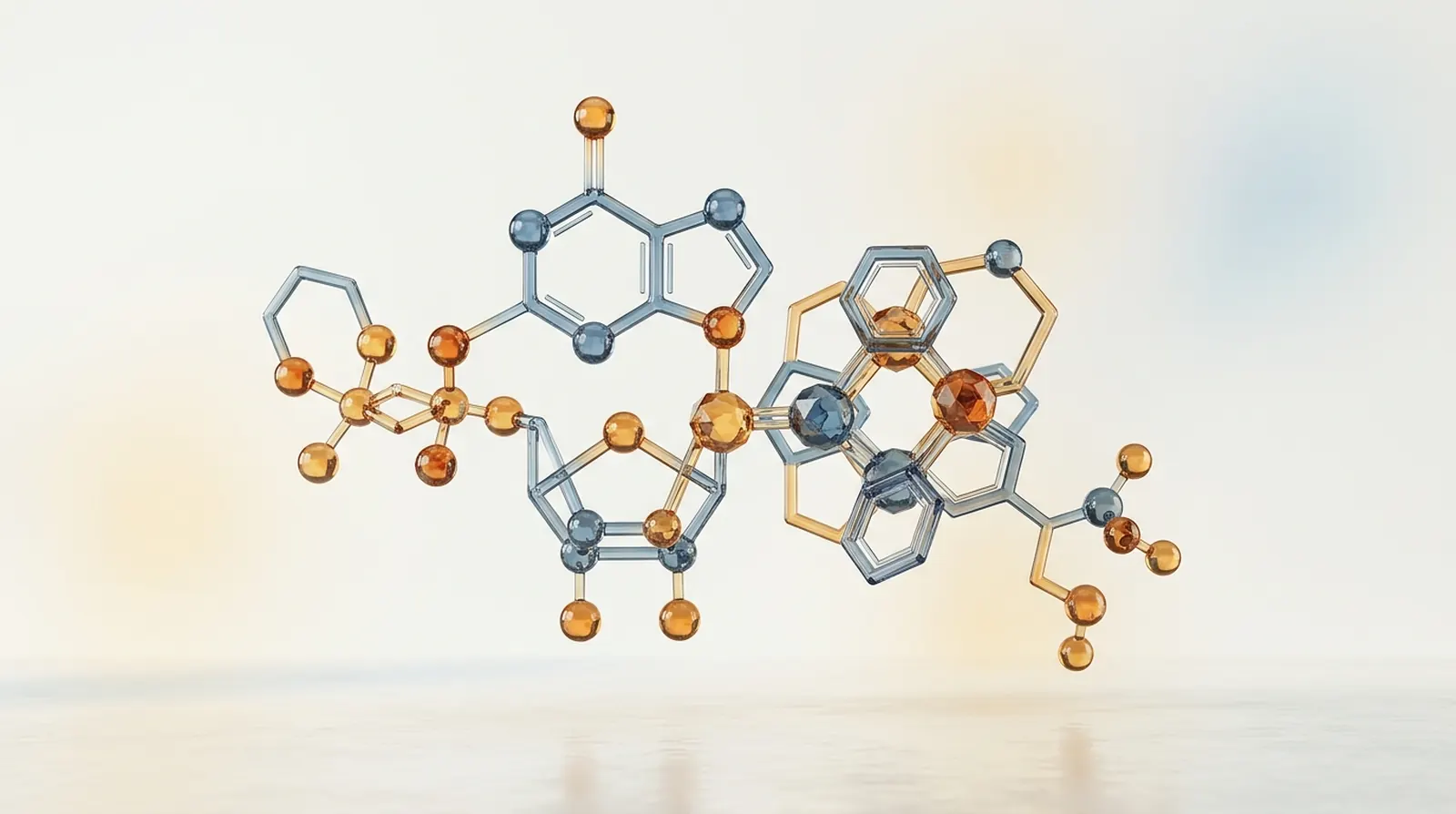
A peptide is a chain of amino acids joined by peptide bonds — a short protein. NAD+ contains no amino acids at all; structurally it is two nucleotides joined through their phosphates, chemistry much closer to the building blocks of DNA than to any protein.
The distinction is not pedantry. Peptides act mostly as signals — keys for specific receptors. NAD+ is infrastructure — a cofactor thousands of reactions consume. Different biology, different plausible interventions, different failure modes when marketing gets ahead of evidence.
What the evidence does and does not show
That NAD+ is essential is textbook biochemistry. That levels decline with age is well documented. Whether raising levels — by IV infusion or oral precursors — produces meaningful health outcomes in humans is the open question, and controlled human data remain limited and mixed.
Precursor supplements reliably raise blood NAD+ markers; translating that into demonstrated clinical benefit is the step research has not yet delivered. Anyone selling certainty on that step is ahead of the science.
Why clinics sell NAD+ next to peptides
Wellness clinics group offerings by theme — energy, recovery, longevity — not by molecular class. NAD+ drips sit on the menu beside peptide protocols because they share a customer, a format and a narrative, not a chemistry.
For a careful reader, the grouping is a prompt to evaluate each item on its own evidence. The questions are the same ones this site always suggests: what is the compound, who has studied it in humans, what did they actually find, and who is overseeing its use.
Frequently asked questions
Is NAD+ a peptide?
No. NAD+ is a coenzyme built from vitamin B3-derived components and nucleotides — no amino-acid chain, so not a peptide by definition.
Is NAD+ therapy the same as peptide therapy?
No — they are different molecule classes doing different jobs, often sold by the same clinics under the same wellness umbrella. Each deserves its own evidence evaluation.
Do NAD+ levels really decline with age?
Declines with age have been measured in several human tissues. What remains unsettled is whether artificially raising levels produces meaningful health outcomes — controlled human evidence is limited.
Are NAD+ IV drips proven?
Proven to raise levels, yes; proven to deliver health outcomes, no — that human evidence is still thin. Discuss goals and alternatives with a licensed provider rather than a sales page.