
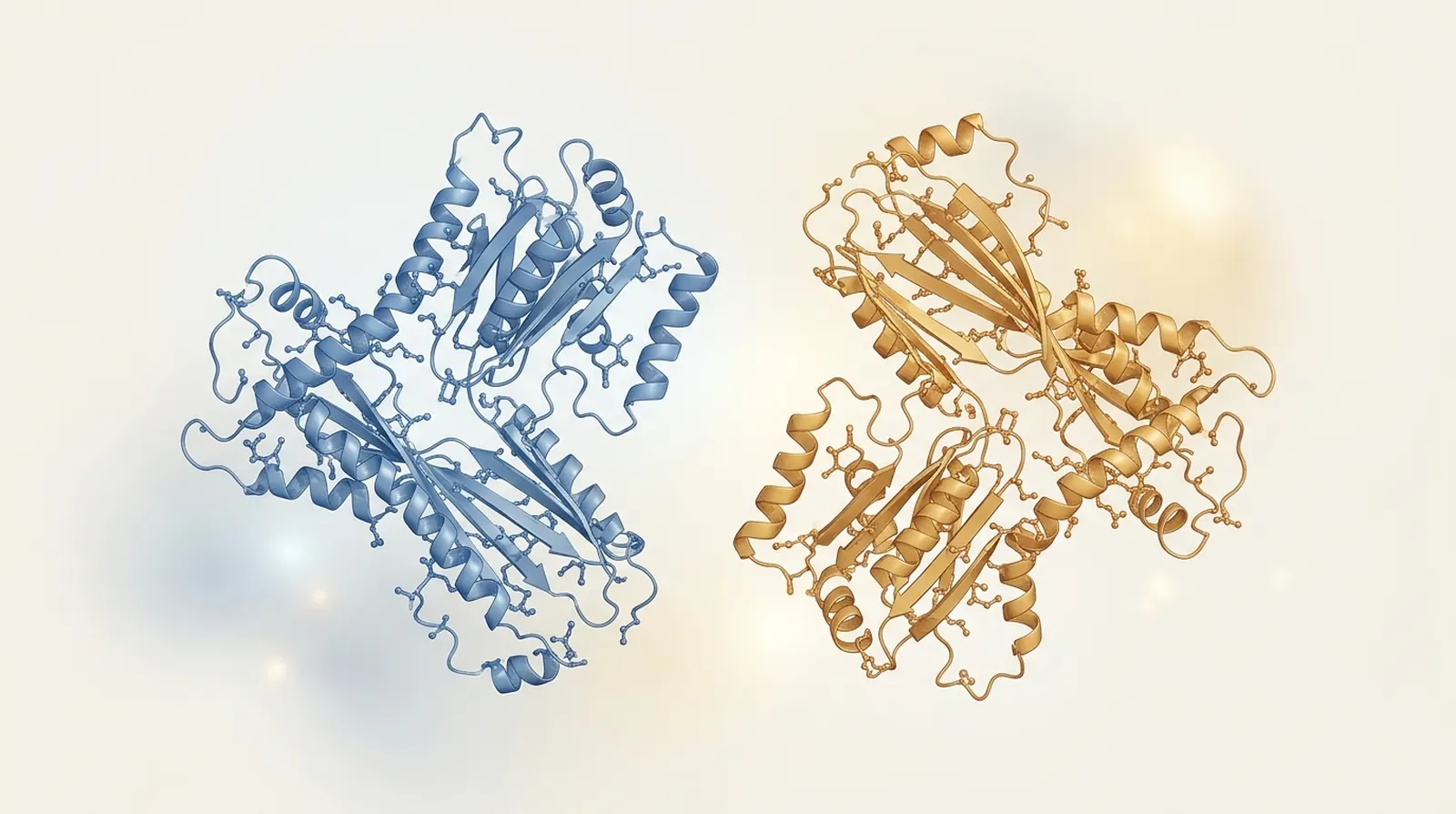
Are GLP-1s Peptides? Tirzepatide, Semaglutide and the Family Tree
Short answer: yes. GLP-1 receptor agonists — semaglutide and tirzepatide among them — are peptides in the strict chemical sense: chains of amino acids engineered to mimic hormones your gut already makes.
The longer answer is more useful, because these particular peptides sit in a completely different category from most of what is marketed as 'peptide therapy' — and the difference is the interesting part.
The chemistry, briefly
GLP-1 (glucagon-like peptide-1) is a roughly 30-amino-acid hormone released by the gut after eating; it stimulates insulin secretion, slows gastric emptying and acts on appetite signaling. The natural hormone survives only minutes in circulation.
The drug class exists because chemists modified the peptide to resist breakdown and to bind carrier proteins, stretching minutes into a week. Semaglutide is such a modified GLP-1 analogue. Tirzepatide goes a step further — a single engineered peptide that activates both the GLP-1 receptor and the GIP receptor, which is why you will see it called a 'dual agonist.'
Why this family is different from 'peptide therapy'
The GLP-1 drugs are FDA-approved medications: they completed large controlled trials, carry approved indications, defined dosing, labeled warnings, and manufacturer accountability. Most compounds sold under the 'peptide therapy' banner have none of that — their human evidence is thin to absent and their legal channel, where one exists, is compounding.
Chemically, both are peptides. Clinically and legally, they could hardly be further apart. When a wellness clinic uses the credibility of the GLP-1 class to market unproven compounds alongside it, that distinction is exactly what is being blurred.
Retatrutide and what is coming
The engineering direction continues: retatrutide, in late-stage trials, is a triple agonist targeting GLP-1, GIP and glucagon receptors with one peptide. It is investigational — not approved, and not something with an established safety profile — but it illustrates the trajectory: increasingly deliberate peptide design against multiple metabolic targets.
Investigational status matters practically. Compounds in trials reach patients through trials; products sold online under the same names sit outside any of that oversight.
Questions this raises for a provider conversation
If GLP-1 medications are on your mind, the productive conversation is with a licensed provider, and these questions frame it:
- Do I meet the approved indications for any GLP-1 medication?
- If a compounded version is proposed, which pharmacy makes it and under what authority?
- What monitoring and follow-up does the plan include?
- How does this interact with my current medications and history?
Frequently asked questions
Is tirzepatide a peptide?
Yes. Tirzepatide is a single engineered peptide designed to activate both the GLP-1 and GIP receptors — a 'dual agonist' — and it is an FDA-approved medication.
Are GLP-1s the same as the peptides sold at wellness clinics?
Chemically they share the category; practically they do not. GLP-1 drugs are FDA-approved with trial-established profiles. Most wellness-marketed peptides are unapproved compounds with limited human evidence, available (if at all) through compounding.
Is retatrutide available?
Retatrutide is investigational — in clinical trials and not FDA-approved. Products sold online under that name are outside the trial and regulatory system that defines what the compound actually is.
Is semaglutide natural GLP-1?
No — it is a modified analogue. Natural GLP-1 lasts minutes in the body; semaglutide's modifications extend its action to about a week, which is what makes it usable as a medication.